The ZUZ journal
Seating that works: families, friends and room for changes
Start with the venue plan and confirmed guests, build comfortable groups and give your reception team a clear working arrangement.
Start with the room, not a table dispute
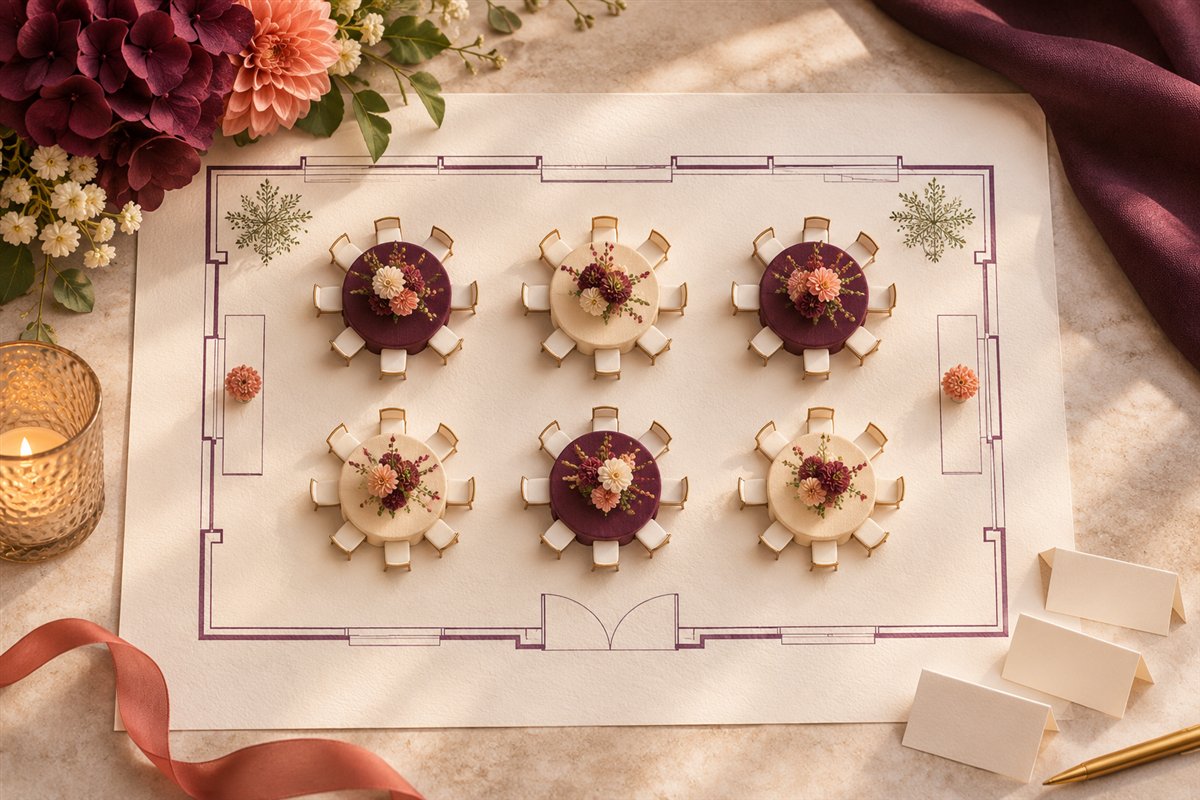
Before placing people, request an up-to-date floor plan and confirm the permitted number of seats at each table. Mark entrances, the dance floor, the stage and routes that must remain clear. Do not assume a large-looking table can take another chair; check with the venue. An accurate map turns social preferences into an arrangement that can actually work and prevents an attractive plan that does not fit the space.
Use a list that reflects attendance
Keep confirmed guests separate from those who are undecided, and check household composition. If an invitation covers four people but only two have confirmed, do not place four as though the answer were final. You can consider options for uncertain guests, but mark them as provisional. Begin with larger groups and guests with a clear practical need for a particular location, rather than working alphabetically and leaving every complicated case until last.
Build groups that feel comfortable
A useful aim is for each guest to have at least one familiar person to talk to. Families, old friends and colleagues can provide starting groups, but not every group must occupy one table when the numbers do not fit. A planned split across two nearby tables is better than crowding. Record requests to sit together or apart briefly and discreetly, and decide which event owner may change those arrangements.
Consider the journey to the seat
Ask about practical preferences instead of assuming them. A guest may prefer to be near an entrance, away from speakers or beside a companion. Discuss what is convenient for families with children and what the venue can accommodate. Keep access routes and aisles consistent with the venue’s instructions. ZUZ provides a visual seating plan with tables and groups, helping you understand the whole arrangement before confirming it.
Give reception a usable plan
Before the event, check that no person is placed twice and every group is linked to the correct table. Make sure map numbers match the labels in the room. Decide who handles changes during arrival and how to respond when someone is missing from the list. Any solution must remain within approved capacity rather than relying on uncoordinated extra chairs. Hand over a current version with a clear contact person. Good seating is not an attempt to control every moment: it gives guests a comfortable beginning and the team a calm foundation for handling reality.
Read the list from a receptionist’s perspective. Can they find a household whose name has several spellings, understand who arrived together and see where to direct them? Walk through a few examples beforehand. Share practical seating information, not personal background that the team does not need to welcome guests.